Sri Lanka’s home for allergy and immunology
Sunday, February 22, 2026
One-stop-centre for education, research and clinical care
By Kumudini Hettiarachchi
Humble have been the beginnings, though it is a matter of life and death for numerous men, women and children – first this critical work on allergies and immunity took place within a small house in Gangodawila, Nugegoda, and then in space shared with the Family Practice Centre.
Now it has come to its own with a four-storey, state-of-the-art building, all grey and glass, occupying pride of place in the premises of the Faculty of Medical Sciences of the University of Sri Jayewardenepura.

Prof. Neelika Malavige
Having completed the formalities of the opening ceremony on January 28, when the Sunday Times visits on February 3, the Institute of Allergology and Immunology (IAI) is a hive of activity. Full of hope, people are flocking here to seek help and answers.
But that is not the sole purpose of setting up the IAI, and the passion and the commitment are obvious when we interview the ‘doers’ behind this project. They are the research head, Prof. Neelika Malavige, Director Research and Development/Professor in Immunology and Molecular Medicine, and Prof. Chandima Jeewandara, Director/Professor in Allergy, Immunology and Molecular Medicine.
Pointing out that there is a “huge gap” in this field, Prof. Malavige said the IAI was established to cover three essential areas – research, education and clinical care in allergology and immunology.
While allergology is the medical speciality that deals with allergies, immunology is the study of the immune system, an important branch of medical and biological sciences. The immune system protects a person from infection.
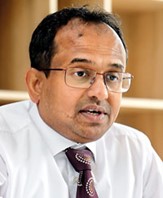
Prof. Chandima Jeewandara
The challenges have been immense – they needed a building, sophisticated equipment, reagents to run all the specialised tests and vital human resources.
“Most of all, sustainability is critical,” reiterated Prof. Malavige.
Looking back, she says that around 2008, research on the immune system was scanty. It was the time when she got into dengue research, setting up the Centre for Dengue Research (CDR) in 2012. The leading figures who gave her and Prof. Jeewandara much support were Sri Jayewardenepura University’s then Vice Chancellor, Prof. Sampath Amaratunga, and Prof. Krishan Deheragoda, Professor of Geography.
The CDR was doing well, and Prof. Amaratunga had taken the initiative of setting up others modelled on it, among which was the Centre for Primary Care and Allergy Research with Prof. Jeewandara as Director.
“As there was no sense in operating two centres in separate silos, a merger saw the creation of an independent unit to facilitate more efficiency in research, while having strong international collaborations,” says Prof. Malavige.
Upgraded in 2023, there were still many challenges to overcome – not being part of the Faculty of Medical Sciences but under the university itself per se, they found themselves to be research nomads – hamstrung by red tape, with no designated space and, more importantly, no crucial laboratories.
The hurdles came in the form of securing basic approvals to get materials cleared from Customs, signing memoranda of understanding (MOUs) with leading international universities and research organisations or even carrying out late-night work, as required by research.
“We needed multiple approvals to work longer hours or during weekends,” says Prof. Malavige, pointing out that when doing research on a blood sample, you simply could not clock out at 6 p.m. Tests such as assays (analytical procedures in laboratory medicine) do not follow human duty hours and also cannot be done at home, like taking a file. Software also could not be bought for individual users.
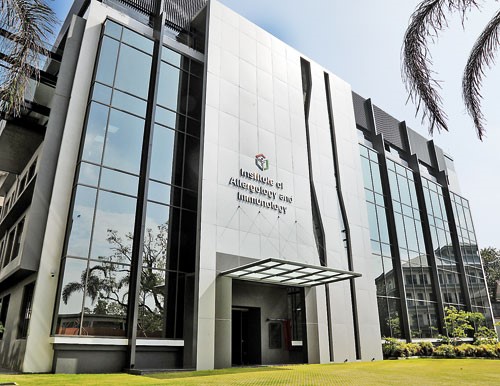
The state-of-the-art IAI
Now, with the IAI, things have changed for the better – with authorised keyed-in access, there is freedom to engage in research which is of national and international importance, according to her, and they have built the IAI from the bottom up.
Continuing the IAI story, its Director, Prof. Jeewandara, said the institute stands for a country that is committed to transforming immunology from a peripheral concern into the cornerstone of the healthcare system. “We are choosing not to wait for the next crisis to strengthen our science; instead, we are actively building that strength right here.”
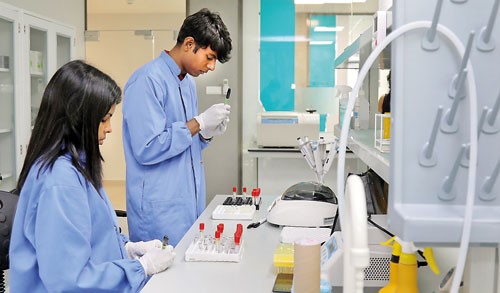
Research assistants at the IAI Pix by M.A. Pushpa Kumara
On a journey down memory lane, he says in those days their work was in a virtual place with no laboratories, renting unused spaces in the university. The story had begun in 2012, when he met Prof. Malavige as her first PhD (doctoral) student while conducting research in the Microbiology Department’s serology lab during a non-academic staff strike. They discussed how their research could be taken to the next level, with Prof. Deheragoda extending a helping hand in developing a proposal to establish the CDR under a Cabinet directive.
“In 2014, with Prof. Amaratunga as VC and Prof. Pathmalal Manage as Research Committee Chairman, the pathway was set for several research centres, and we established one with a focus on Primary Care and Allergy Research, marking our first steps in the latter sphere,” he said, explaining how, after several attempts, they were able to get the Cabinet’s nod in 2019 for a state-of-the-art laboratory through a budget call.
He says, “The true test of our resilience came in 2020 after seven failed attempts at writing seven grant applications. In 2020, we became the heartbeat of the national COVID-19 response, while simultaneously managing a massive surge in allergy patients.”
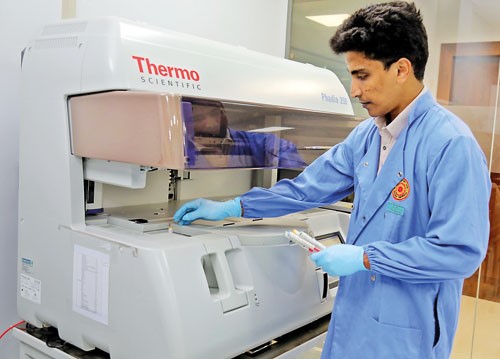
The Phadia 250, the only such equipment in Sri Lanka, used to detect allergen-specific IgE to find out what patients are allergic t
While winning a grant from South Korea’s Sungkyunkwan University (SKKU) for the Immunology & Molecular Medicine Capacity Building Project, Prof. Jeewandara gives the plus points of the research budgets 2020-2024 – 100% externally funded research enabling independence and no burden to the Treasury. This financial sustainability was ensured by global grants and competitive funding.
The drawback for development, however, was the need for a statutory body for allergy and immunology education. It was then that the Allergy, Immunology and Cell Biology Unit (AICBU) of the University of Sri Jayewardenepura came into being.
Transitioning over 13 long years, finally the team saw the birth of the IAI in 2025. It is designed to be a convergence point where clinical services, student training and discovery intersect.
The investment for IAI was Rs. 4.5 billion, which consisted of a 25% contribution from the government and everything else from competitive research grants. Around Rs. 30 million below estimated cost and completed one month ahead of schedule, the IAI, with its platinum-grade green building rating, is up and running.
Its international partners are impressive – Oxford University and Imperial College in the United Kingdom, Duke-NUS in Singapore, Sungkyunkwan University in South Korea, the University of North Carolina in the United States of America and the World Health Organization (WHO).
Sustainability will be guaranteed, assures Prof. Jeewandara, through income from postgraduate courses, clinical laboratory services and commercialization of product development.
The future
Prof. Neelika Malavige and Prof. Chandima Jeewandara focus on their current and future work.
n The development of dengue diagnostics and prognostic markers to predict severe dengue. Research and development are already happening on the development of a dengue NS1 antigen kit and identification of biomarkers. This is while there is strong collaboration with industry partners.
n Working with industry – investigating traditional medicine and medicinal plants for potential cures for infectious diseases and allergies. A couple of patents have already been filed.
The future holds out much hope for the IAI in:
n Education – covering B.Sc, M.Sc, PhD, MD and more.
n Research – wide and varied areas such as allergies, infectious diseases (dengue, COVID-19, influenza, tuberculosis, etc.), a wastewater surveillance programme, microbiome, autoimmunity, biomedical engineering and transplant immunology.
n Clinical care – through cutting-edge diagnostics.
While IAI is a national referral centre for allergic diseases, weekly clinics are being held for patients, and epi-pen distribution is taking place. The other aspects include laboratory tests and hospital visits for drug provocation tests. On the register as of 2024 were more than 2,000 patients, while over 1,000 epi-pens had been distributed.
The IAI’s goal is simple, says Prof. Jeewandara: to improve quality of life, detect epidemics early, find cost-effective interventions and diagnostics and cost-effective treatment using indigenous knowledge. “We want solutions suitable for our country and our people and not ‘imported solutions’,” he added.
Highchem R Ceylon Company (Private) Limited’s association with ThermoFisher/Phadia AB, Sweden, is a testament to their commitment to providing state of the art allergy and immunology testing services. Phadia’s technology is indeed considered the gold standard worldwide.Key Institutions in Sri Lanka, such as Medical Research Institute, Sri Jayawardena Pura University, Lanka Hospital Diagnostics, and Asiri Laboratories invested in the entry level Phadia platforms for allergy testing over 8 yrs ago. SJU was the first to upgrade to the Phadia 250 a versatile platform that offers a wide range of allergen tests including over 500 whole allergens and mixes and 100 allergen components. The SJU has invested in the ISAC system used for research purposes as well. This is a significant achievement making the SJU a leading center for allergy and autoimmune testing in the region.
Medical Research Institute and Lanka Hospital Diagnostics have followed with the Phadia upgrades.
Commendations to SJU and other institutions for staying at the forefront of allergy and immunology testing technology in Sri Lanka!
